
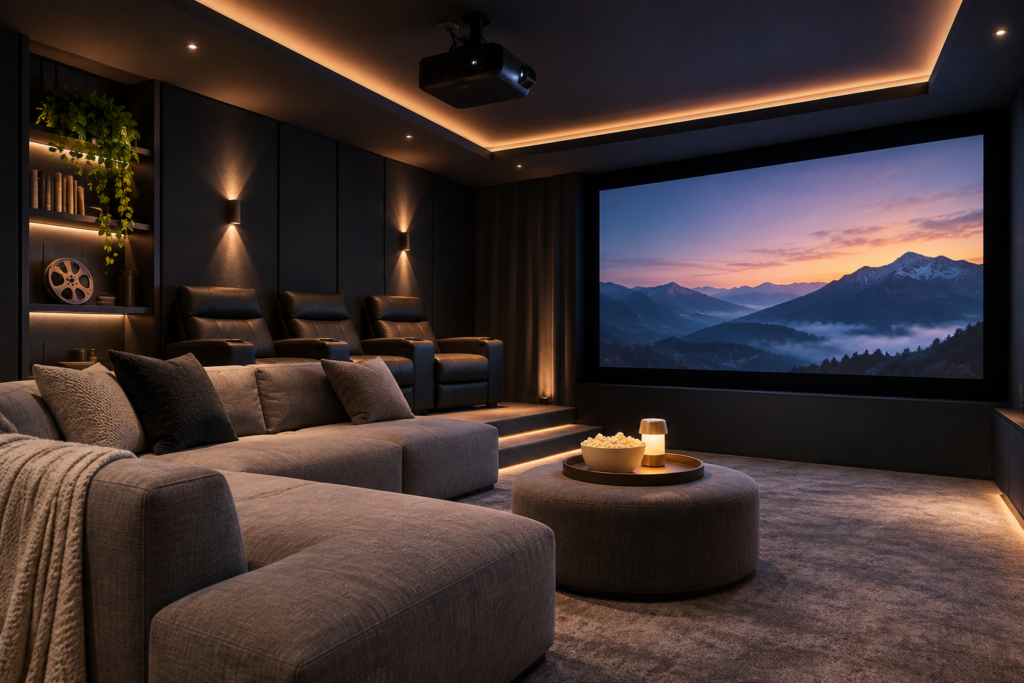
A dedicated cinema room is one of the most rewarding spaces you can add to a home, and also one of the easiest to get wrong. These home cinema room ideas cover the decisions that matter most, from choosing the room and the screen to sound, lighting, seating and control, so the result looks good and performs like a real cinema.
Home cinema room ideas: start with the right room
The best home cinema rooms are rectangular, have few or no windows and are away from bedrooms. A basement, a spare bedroom or a converted garage often works well. The room’s shape and position affect sound quality and how much soundproofing you will need more than any piece of equipment.
Before buying anything, measure the room and note windows, doors and where the seating will go. Rectangular rooms are easier to treat acoustically than square ones, and a room with no shared walls with bedrooms will need less isolation. If noise is a concern, read our guide on how to soundproof a home cinema room before you start building.
Projector or large TV?
A projector with a dedicated screen gives the most cinematic image, especially above 100 inches, and needs a room you can make fully dark. A large TV is brighter, simpler to install and better for rooms that are also used in daylight. The choice depends on screen size, light control and how the room will be used.
| Option | Best for | Watch out for |
|---|---|---|
| Projector and fixed screen | Dedicated, fully dark rooms and screens of 100 inches or more | Needs light control and careful mounting |
| Projector and motorised screen | Multi-use rooms where the screen hides when not in use | Plan the recess or ceiling box in advance |
| Large TV (75 to 98 inches) | Media rooms used in daylight | Less immersive at very large sizes |
For viewing distance, the industry guidelines are a useful starting point: SMPTE recommends that the screen fills at least 30 degrees of your field of view, and THX suggests around 36 to 40 degrees for a more immersive experience.
Sound ideas for a home cinema room
Good sound matters as much as the picture. A 5.1 or 7.1 surround system is the minimum for a dedicated room, and adding height speakers for Dolby Atmos (for example a 7.1.4 layout) creates sound that moves above you. In-wall and in-ceiling speakers keep the room clean and uncluttered.
Speaker layout
Place the front speakers around the screen and the surround speakers at ear height to the sides and behind the seats.
Subwoofers
Two subwoofers usually give smoother bass across all seats than one.
Acoustic treatment
Absorption panels at reflection points and bass traps in corners make dialogue clearer.
Acoustically transparent screen
Lets you hide the front speakers behind the image.
Home cinema room ideas for lighting: set the mood with scenes
Cinema lighting should be dimmable, indirect and controlled by scenes: bright for cleaning, soft for arriving guests and almost dark during the film. Step lights and low-level LED strips keep people safe when they move, and a fibre-optic star ceiling adds a classic cinema feel.
Warm light tends to feel more relaxing in a cinema room; our guide on warm or cool light explains how to choose. Every circuit should be connected to a dimmer switch or a lighting control system, so the lights fade gently when the film starts. If you are planning a full lighting design, see our lighting system in Marbella service.
Planning a home cinema room?
We design complete cinema rooms in Marbella and Malaga: projection, surround sound, acoustic treatment, lighting scenes and one-touch control.
Seating, layout and comfort
Seating and risers
Plan seating around the screen, not the other way round. Two rows usually need a riser of about 20 to 30 cm for the back row so everyone has a clear view. Recliners with space behind them, side tables and quiet ventilation make long films more comfortable.
Finishes, colours and ventilation
Dark, matte finishes on walls and ceiling reduce reflections on the screen. Deep blue, charcoal and burgundy are classic choices. Air conditioning is often forgotten: equipment and people generate heat, so plan quiet, well-placed vents from the start.
One-touch control for the whole room
The finishing touch of a great cinema room is control. A single button or app scene can dim the lights, close the blinds, lower the screen, switch on the projector and set the volume at once. It is what makes the room easy for every member of the family, not just the person who installed it.
In homes with full automation, the cinema room is integrated with the rest of the house, so you can also check it or switch it off remotely. Find out more in our home automation Marbella page, or see how we design complete rooms in our home audio video installation Marbella service.
Frequently asked questions about home cinema rooms
How big does a room need to be for a home cinema?
A room of around 15 to 20 square metres is enough for one row of seats and a large screen. Two rows are more comfortable from about 25 square metres.
What colour should a home cinema room be?
Dark, matte colours such as charcoal, navy or deep red work best because they absorb light and reduce reflections on the screen.
Do I need Dolby Atmos in a home cinema room?
It is not essential, but height speakers make the sound far more immersive. If you are building a dedicated room, it is easier to wire for them from the start.
Can a home cinema room be used for other things?
Yes. With a motorised screen and lighting scenes, the same room can work as a games room, a lounge or a space for watching sport.
